


Each year, approximately 600,000 people in the United States sustain injuries while skiing or snowboarding, with wrist and knee injuries being among the most common. While it is not always possible to eliminate these injuries, Jason Jennings, MD, DPT, an Orthopedic Surgeon at Colorado Joint Replacement with the AdventHealth Medical Group, offers several tips to help prevent serious injury.
Protecting yourself from injury doesn’t start just before you take your first run or even a month before ski and snowboard season begins. Dr. Jennings believes that preparation should last all year long.
Many of the injuries that Dr. Jennings sees in his clinic, Colorado Joint Replacement, involve patients that overdo it, and their bodies can’t keep up.
“The most important thing is to develop a routine and stay active. Consistency is key to success,” said Dr. Jennings. “Many of the injuries are related to overuse, meaning people who are going out early in the year may not be conditioned and develop muscle tightness or soreness that may persist.”
Dr. Jennings suggests training with weights or practicing your cardiovascular fitness throughout the year to make sure your body is ready for the rigors of ski and snowboard season. Regularly stretching is also an important part of keeping your body ready.
“Injury may be less likely to occur in people who stay consistently active throughout the year. Weekend warriors or those who choose to only ski and snowboard without appropriate stretching and strengthening may be at increased risk of injury,” said Dr. Jennings.
On top of stretching and strengthening throughout the year, if you have preexisting injuries it could be helpful to wear braces or guards for extra protection.
As for what types of injuries to expect, Dr. Jennings most commonly deals with knee ligament injuries with skiers and for snowboarders it is typically wrist or hand injuries. If you experience an injury on the slopes or start to feel something when you get home, Dr. Jennings suggests using the same rule of thumb as with any other injuries.
“An inability to put weight on the upper or lower extremity is a sign of concern. As a general rule, if something doesn’t seem right and seems to be more than a bump or a bruise, you should seek medical expertise for an evaluation,” said Dr. Jennings.
If you are injured and need to care for yourself at home, use the PRICE principle. Protect the joint/bone, Rest, Ice, Compression and Elevation.
Dr. Jennings also emphasizes the importance of wearing a helmet while skiing or snowboarding. “Head injuries are uncommon, but if they happen, they can be devastating. So, we recommend wearing a helmet for 100% of people that hit the slopes,” said Dr. Jennings.
If you would like to schedule an appointment with Dr. Jason Jennings, click here.

6 items. To interact with these items, press Control-Option-Shift-Right Arrow.

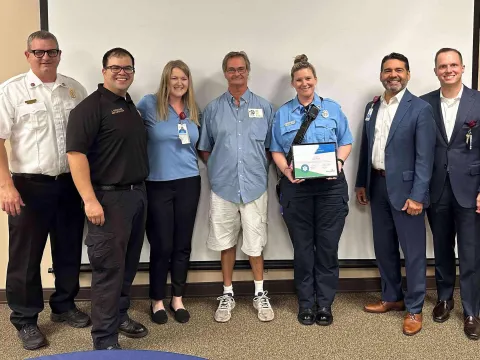




AdventHealth South Overland Park awarded Primary Stroke Center Certification from The Joint Commission
AdventHealth South Overland Park has earned The Joint Commission’s Gold Seal of Approval® and the American Heart and Stroke Association’s Heart-Check mark for Primary Stroke Certification.
AdventHealth Zephyrhills thanks first responders during EMS week
AdventHealth Zephyrhills honors first responders during EMS Week.
ER doctors and nurses say thank you to EMS workers
Hear from our doctors and nurses why they love our EMS partners and join us in saying THANK YOU!
Former patient returns to AdventHealth Littleton to comfort moms in the NICU
A former patient of AdventHealth Littleton returned to recognize NICU moms on Mother’s Day.
Protecting Your Skin: Insights and Innovations During Skin Cancer Awareness Month
Skin Cancer Awareness Month serves as a crucial reminder of the importance of vigilance in detecting and preventing skin cancer, the most common cancer affecting both men and women in the United...
Winners of inaugural Grayson Murray Be Kind to One Another Legacy Award announced
The AdventHealth Championship announced the winners of the inaugural Grayson Murray Be Kind to One Another Legacy Award: longtime Korn Ferry Tour player Josh Teater is the winner of the player/caddie...