

From stiffness to a small tremor or speech changes, the signs of Parkinson’s disease are diverse and often subtle. Although Parkinson’s disease cannot be cured, early detection of the progressive nervous system disorder can make a dramatic difference in helping control symptoms. Scientists at the AdventHealth Translational Research Institute are working on diagnostic advancements to help more patients before they experience significant nervous system damage.
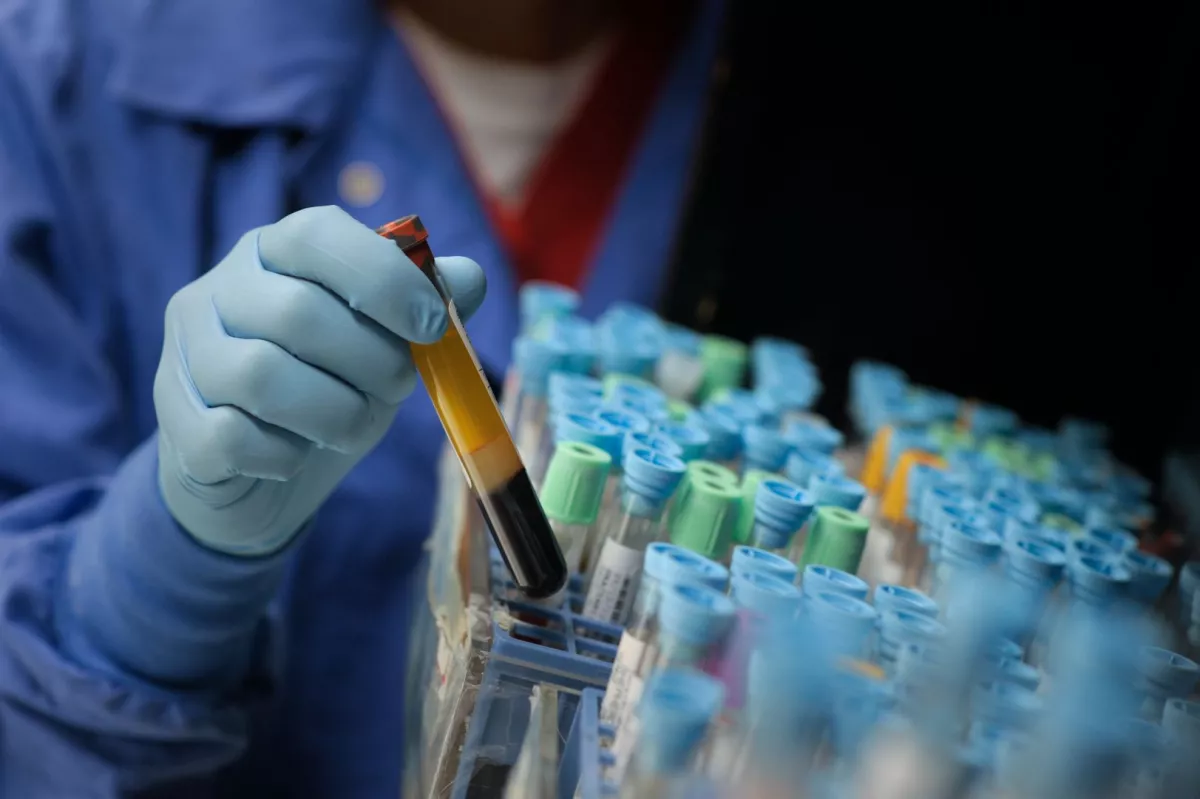
Kirk Erickson, Ph.D., director of translational neuroscience at AdventHealth’s Central Florida Division, was recently part of a research team that has developed a blood test that detects an indicator of Parkinson’s disease. Based on earlier studies that associated mitochondrial DNA damage with an increased risk of Parkinson’s disease, Erickson, as part of a team led by Duke Health, helped develop an assay, or testing procedure, that successfully measures higher levels of mitochondrial DNA damage in blood cells collected from patients with Parkinson’s disease compared to people without the disease. The newly developed test also identified high levels of the damaged DNA in the blood samples of those with the LRRK2 genetic mutation, which has been associated with an increased risk of the disease as well.
"Our research continues as we hope to be able to detect the disease even before our patients present with symptoms."
So, what does this mean for those most at-risk for Parkinson’s disease? Once the test becomes available, future patients may experience shorter wait times to be diagnosed with the disease, enabling potentially greater access to medications and other therapies that may ease symptoms and delay progression.
“This breakthrough is a game-changer,” said Erickson. “Currently, a diagnosis of Parkinson’s disease takes time as it is based on a patient’s medical history, along with a physical and neurological exam. This process is compounded by the fact that many symptoms of Parkinson’s disease can go unnoticed as they begin to affect the body’s nervous system. With a simple blood test, our aim is to reduce the time to diagnosis and help patients get the critical care they need to live longer and more comfortably with Parkinson’s disease.”
Erickson added, “Our research continues as we hope to be able to detect the disease even before our patients present with symptoms.”
The Duke Health team that spearheaded this research was led by senior author Laurie Sanders, Ph.D., an associate professor in Duke School of Medicine’s departments of neurology and pathology and member of the Duke Center for Neurodegeneration and Neurotherapeutics. The research received support from numerous international organizations. To read the study, please visit Science Translational Medicine here.
6 items. To interact with these items, press Control-Option-Shift-Right Arrow.
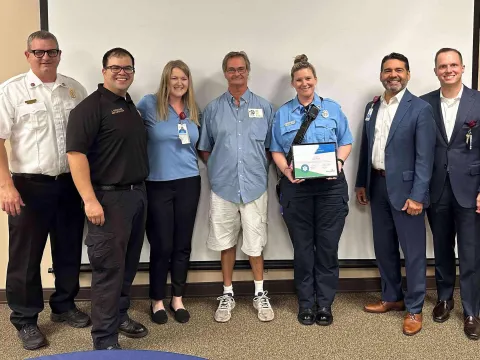




AdventHealth Zephyrhills thanks first responders during EMS week
AdventHealth Zephyrhills honors first responders during EMS Week.
ER doctors and nurses say thank you to EMS workers
Hear from our doctors and nurses why they love our EMS partners and join us in saying THANK YOU!
Rob Deininger named president/CEO of AdventHealth’s East Florida Division
AdventHealth has named Rob Deininger president and CEO of its East Florida Division, which includes facilities in Volusia, Lake and Flagler counties, effective May 4, 2025.
Celebrating EMS Week: Honoring our EMS teams in the Rocky Mountain Region
Emergency Medical Services (EMS) Week is a time to honor the incredible dedication and exceptional skill of EMS providers who operate tirelessly to safeguard our communities.
AdventHealth Littleton nurse practitioner empowers families to save lives
Jodi McAndrew, NP knows the importance of CPR training. That’s why she has made it her mission to bring CPR training to Littleton Public Schools.
AdventHealth New Smyrna Beach Foundation adds three new board members
AdventHealth New Smyrna Beach Foundation adds three new board members